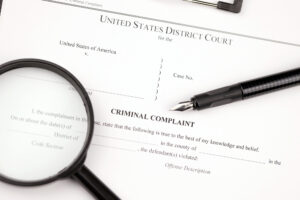
 When you file a criminal complaint, you set in motion a series of legal steps that can feel complex and overwhelming. For attorneys and their clients, understanding this process is key to managing expectations and making informed decisions. Once a complaint is filed with a Dallas-area law enforcement agency, the case begins a journey through the Texas criminal justice system, where every step is governed by strict procedural rules.
The Initial Investigation
After a complaint is made, the police launch an investigation to determine if there is enough evidence to support the allegations. This may involve interviewing witnesses, gathering physical evidence, and speaking with the person accused of the crime. For a police officer to make an arrest, they must have probable cause. This can be based on evidence they see firsthand or information gathered during their investigation that leads to an arrest warrant. Once a person is arrested for a potential felony in Dallas, law enforcement agencies must prepare and file the case with the District Attorney’s office.
The Prosecutor’s Review
The Dallas County District Attorney’s Office is responsible for prosecuting criminal cases. A prosecutor will review the evidence provided by the police to decide whether to formally file charges. For misdemeanors, this process can take months, but for more serious felony offenses, the case must be presented to a grand jury. The prosecutor has significant discretion at this stage and controls what evidence the grand jury hears. This is a critical point where the case can either move forward or be dismissed based on the strength of the evidence. You can learn more about the steps that follow an arrest from the official Dallas County criminal justice process overview.
Grand Jury and Indictment
A grand jury is made up of citizens who review felony cases to decide if there is sufficient evidence to proceed to trial. This is not a trial; the defendant and their attorney do not have a right to be present. If at least nine grand jurors agree there is sufficient evidence, they will issue a “true bill of indictment,” formally charging the individual. The specific rules for these proceedings are detailed in the Texas Code of Criminal Procedure. If the grand jury does not find enough evidence, they will “no bill” the case, and the matter is dropped. In Dallas, an indicted case is then assigned to a trial court.
From Arraignment to Resolution
After an indictment, the defendant has an arraignment, which is their first official court appearance where the formal charges are read. Following this, the defense attorney and prosecutor often begin plea negotiations to see if they can resolve the case without a trial. The vast majority of criminal cases are resolved through such plea bargains. If no agreement is reached, the case will be set for trial, where a judge or jury will determine guilt or innocence.
This journey is lengthy and technical. An experienced legal support team is invaluable for navigating its complexities. At Accurate Serve® of Dallas, our certified process servers ensure that all legal documents are handled with the speed and precision your case demands. We provide essential services like process serving, skip tracing, and document retrieval to support attorneys every step of the way.
Need to keep your cases moving forward with reliable legal support? Call Accurate Serve® of Dallas today at (469) 225-0451 or submit a work request online to ensure your legal documents are served accurately and professionally.